Persepolis: A Comprehensive Overview (Filetype:PDF Focus)
Persepolis, founded around 518 B.C. by Darius the Great, showcases Achaemenid architecture. PDF documentation details its function as an imperial center, receiving dignitaries and celebrating wealth.
Persepolis, a UNESCO World Heritage site, stands as a monumental testament to the Achaemenid Empire’s grandeur. Digital resources, particularly those in PDF format, offer comprehensive explorations of this ancient city, revealing its historical significance and architectural marvels. Founded by Darius the Great around 518 B.C., Persepolis wasn’t merely a city; it was a ceremonial capital designed to showcase the empire’s power and multiculturalism.
These PDF documents detail how construction continued under subsequent rulers, notably Xerxes I, spanning over a century before its completion. The site’s layout, meticulously planned, included a grand terrace, the Apadana Palace, and administrative centers like the Council Hall. The wealth of the Achaemenid Persian empire is evident in every aspect of its construction, as documented in archaeological reports available as PDFs.
Furthermore, the intricate reliefs and carvings, preserved in detailed photographic documentation within these PDF files, depict exotic animals and representatives from diverse ethnic groups, highlighting the empire’s vast reach. Persepolis served not only as a seat of government but also as a venue for receiving dignitaries and celebrating imperial riches, a narrative vividly illustrated through accessible PDF resources.
II. Historical Context & Founding
The founding of Persepolis in 518 B.C. by Darius the Great arose from a need for a ceremonial capital distinct from existing administrative centers like Susa and Babylon. PDF analyses of historical texts, including accounts from Greek historians like Ctesias, reveal the strategic and symbolic importance of the site’s location in the Marvdasht Plain. Darius envisioned a city that would embody the Achaemenid Empire’s power and multicultural character.
PDF documentation details how the choice of the site wasn’t accidental; it held cultural significance and provided a secure location for showcasing imperial wealth. The construction, initiated by Darius, aimed to create a lasting monument to his reign and the empire’s prosperity. These early phases, extensively documented in archaeological PDF reports, focused on establishing the foundational terrace and initial palace structures.
Further PDF research indicates that the founding wasn’t simply a political decision but also a deliberate act of cultural expression. The city’s design and subsequent embellishments, as revealed in detailed architectural PDFs, were intended to impress foreign dignitaries and reinforce Achaemenid authority. The initial impetus for Persepolis, therefore, stemmed from a combination of political strategy and imperial ambition.
III. Darius the Great and the Foundation (c. 518 B.C.)
Darius the Great initiated the construction of Persepolis around 518 B.C., marking a pivotal moment in Achaemenid history. PDF analyses of inscriptions and archaeological findings confirm his direct involvement in selecting the site and outlining the initial architectural plans. He aimed to establish a magnificent ceremonial capital reflecting the empire’s vastness and power.
PDF documentation reveals Darius commissioned the foundational terrace, a massive platform designed to support the palace complex. This undertaking involved extensive engineering and logistical planning, detailed in surviving administrative records available in PDF format. His vision extended beyond mere construction; he sought to create a lasting symbol of Achaemenid legitimacy.
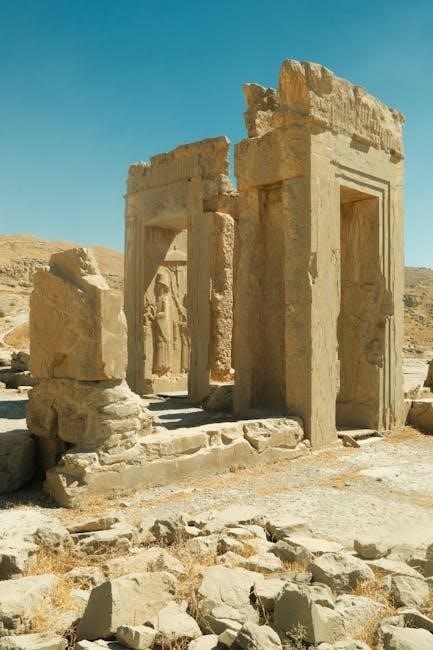
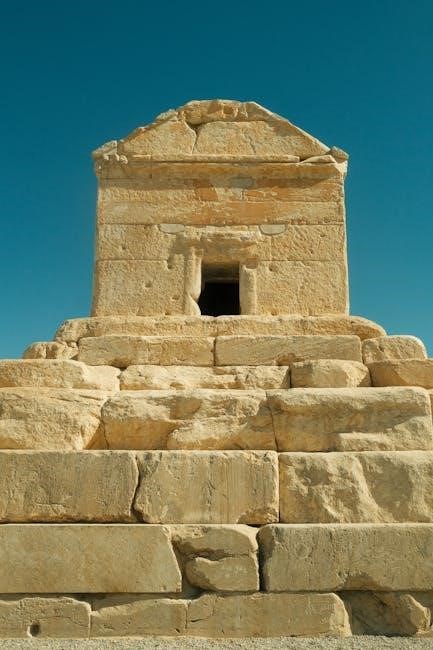
Further PDF research highlights Darius’s focus on incorporating diverse artistic influences into the city’s design. Early structures, as depicted in architectural PDFs, demonstrate a blend of Persian, Mesopotamian, and Egyptian styles. His tomb, uniquely positioned on a cliff face accessible only by ropes, as noted in historical PDFs, exemplifies his preference for monumental and secure burial sites, solidifying his legacy.
IV. Construction Timeline & Completion (Extending into Xerxes I’s Reign)
While Darius the Great initiated Persepolis’ construction around 518 B.C., its completion spanned over a century, extending significantly into the reign of his son, Xerxes I. PDF analyses of construction phases reveal a deliberate, ongoing project rather than a single, rapid build. Xerxes continued his father’s ambitious plans, commissioning key structures like the Apadana and the Imperial Treasury.
PDF documentation details how Xerxes’ contributions are evident in the expansion of the palace complex and the refinement of existing structures. He oversaw the intricate relief carvings and embellishments, showcasing the empire’s wealth and power. Archaeological PDFs illustrate the continuation of architectural styles, building upon Darius’s initial designs.
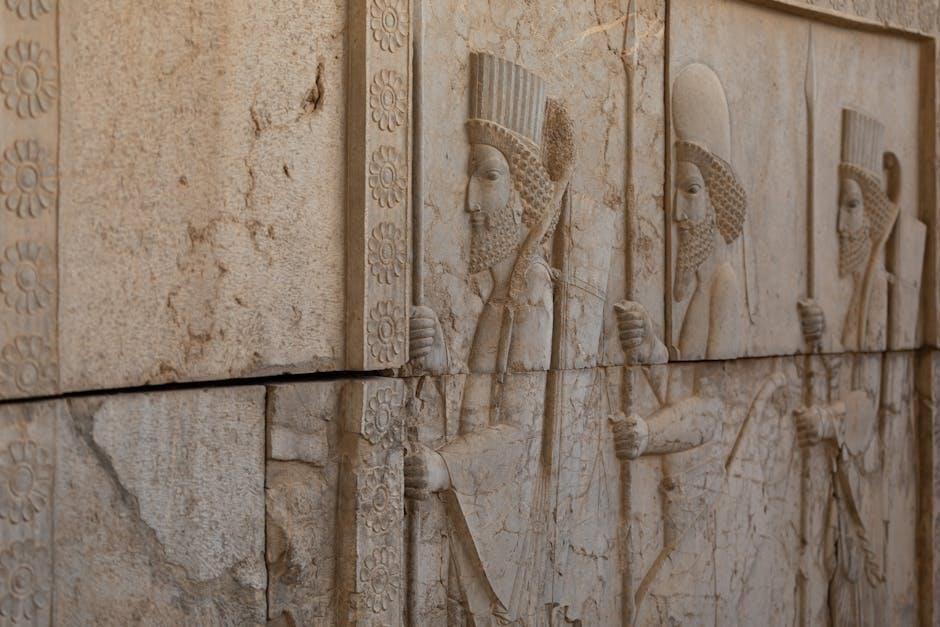
The construction persisted until the Achaemenid Empire’s fall, with subsequent rulers adding their own touches. Detailed timelines, available in comprehensive PDF reports, demonstrate a consistent commitment to Persepolis as a symbol of imperial grandeur. These PDF resources confirm the city was never truly “finished,” but rather evolved over time, reflecting the dynasty’s enduring legacy.
V. Architectural Overview
Persepolis’ architectural design, extensively documented in PDF reports, reveals a magnificent palace complex built upon a massive elevated terrace. This terrace served as the foundation for the royal buildings, showcasing the empire’s power and sophistication. PDF analyses highlight the strategic placement and monumental scale of the structures, designed to impress visiting dignitaries and demonstrate Achaemenid authority.
Key components, detailed in architectural PDFs, include the Apadana Palace – a grand reception hall – the Council Hall (Throne Hall) used for administrative purposes, and the Imperial Treasury, the empire’s economic hub. These structures, meticulously illustrated in PDF diagrams, demonstrate a sophisticated understanding of engineering and design.
The architecture, spanning the Achaemenid period (518-331/30 B.C.), is characterized by monumental scale, precise stonework, and elaborate relief carvings. PDF documentation confirms that, aside from a few post-Achaemenid remnants, the palace complex’s architecture dates entirely from this period, representing a cohesive imperial vision. These PDF resources provide a comprehensive overview of Persepolis’ architectural brilliance.
VI. The Terrace: Foundation of the Palace Complex
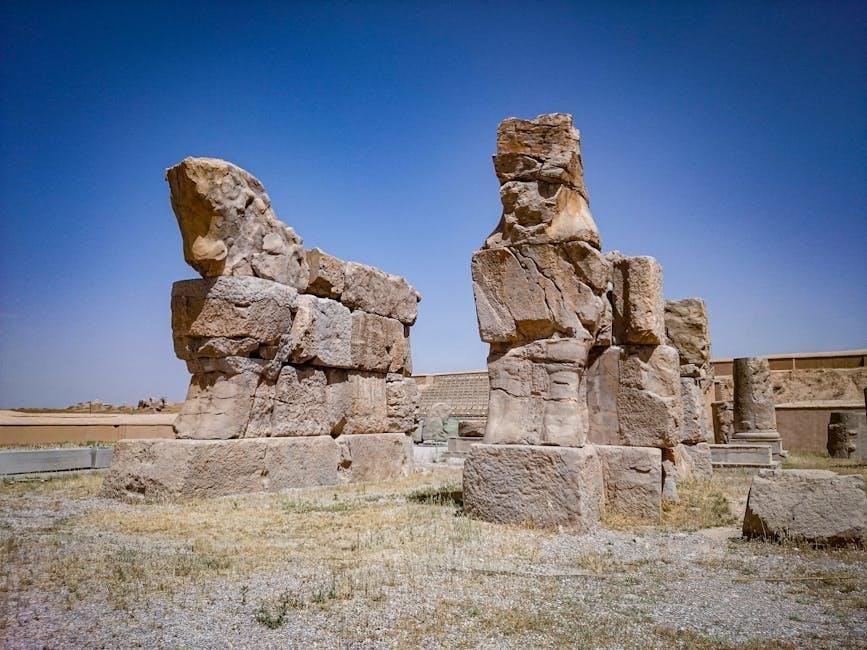
The imposing terrace at Persepolis, thoroughly examined in available PDF documentation, forms the very foundation of the entire palace complex. Constructed as a massive platform, it elevates the royal buildings, creating a visually striking and symbolically powerful statement of imperial authority. PDF analyses reveal a carefully engineered structure, built with substantial stone blocks and retaining walls to support the weight of the subsequent constructions.
PDF reports detail how the terrace wasn’t merely a structural base, but also a deliberate design element intended to impress visitors. Its elevated position offered panoramic views and emphasized the grandeur of the Achaemenid Empire. The terrace’s construction, as illustrated in architectural PDFs, demonstrates advanced engineering skills and a clear understanding of landscape integration.
Access to the terrace was controlled, likely through monumental stairways, further enhancing the sense of awe and reverence. Detailed PDF reconstructions showcase the terrace as the central organizing principle of the palace complex, upon which all other structures were built, solidifying its importance.
VII. Apadana Palace – The Grand Reception Hall
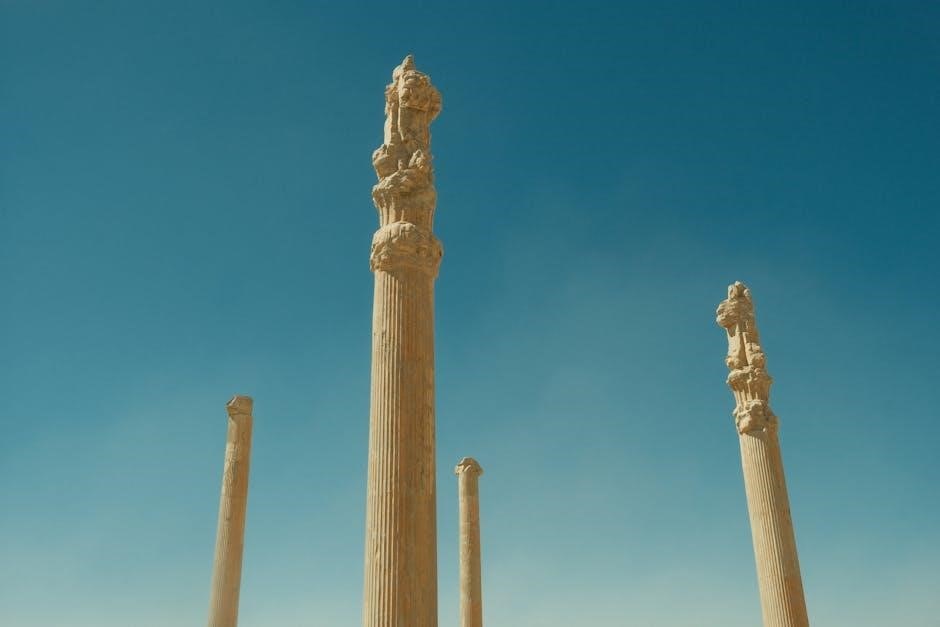
The Apadana Palace, extensively documented in PDF files detailing Persepolis, stands as the most magnificent structure within the complex. It served as a grand reception hall, designed to impress visiting dignitaries and showcase the power of the Achaemenid Empire. PDF analyses reveal a vast hypostyle hall, supported by seventy-two colossal columns, many of which were elaborately decorated.
Detailed architectural PDFs illustrate the Apadana’s layout, featuring multiple entrances and a central space intended for royal audiences. The palace’s walls were adorned with intricate relief carvings, depicting scenes of tribute bearers from across the vast empire – a visual representation of its wealth and diversity, as shown in PDF imagery.
PDF reports highlight the Apadana’s construction, initiated by Darius the Great and completed during Xerxes I’s reign. The palace’s design reflects a blend of Persian and other cultural influences, demonstrating the empire’s cosmopolitan nature. Studying the PDF documentation provides insight into the Apadana’s function as a symbol of imperial power and a stage for diplomatic encounters.
VIII. Council Hall (Throne Hall) – Administrative Center
The Council Hall, often referred to as the Throne Hall, functioned as a crucial administrative center within Persepolis, as detailed in numerous PDF reports. These PDF documents showcase its role in imperial governance and decision-making. Architectural PDFs reveal a large rectangular hall, featuring eighty columns, though less ornate than those in the Apadana Palace.
PDF analyses indicate the hall was used for royal audiences, administrative meetings, and potentially judicial proceedings. Relief carvings on the walls, meticulously documented in PDF imagery, depict scenes of the king receiving tribute and conducting official business. These carvings provide valuable insights into Achaemenid administrative practices.
PDF studies highlight the hall’s strategic location within the palace complex, facilitating access for officials and envoys. The Throne Hall’s design, as illustrated in detailed PDF plans, emphasizes functionality and authority. It served as the heart of the Achaemenid Empire’s administrative machinery, a testament to its organizational prowess, all thoroughly cataloged in available PDF resources.
IX. Imperial Treasury – Economic Hub
The Imperial Treasury at Persepolis served as the economic heart of the Achaemenid Empire, a function extensively documented in available PDF reports. These PDFs detail the vast wealth accumulated through tribute and taxation, flowing through this central hub. Architectural PDFs reveal a series of rooms designed for storing immense quantities of gold, silver, and other valuable commodities.
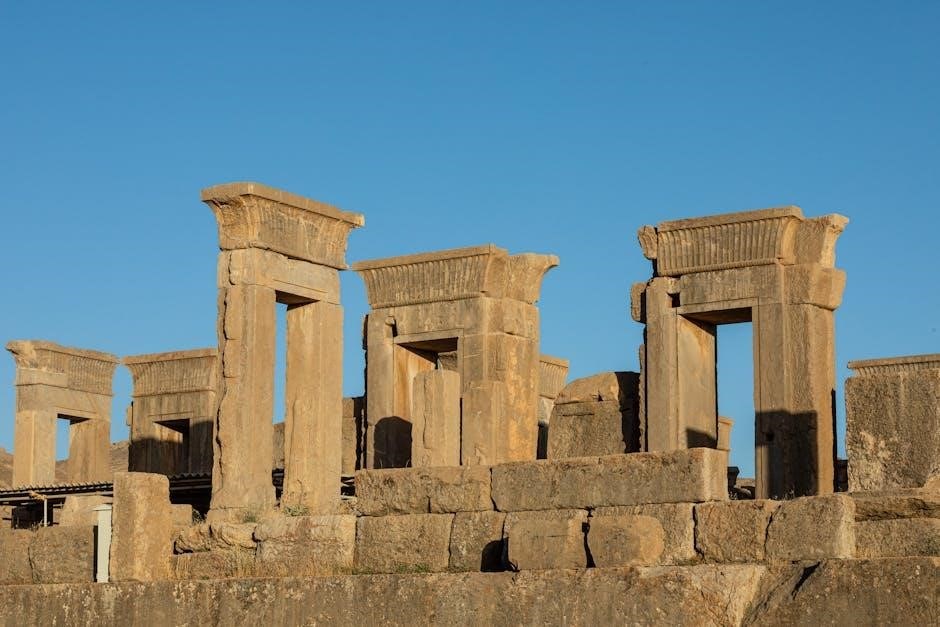
PDF analyses suggest the Treasury wasn’t merely a storage facility, but also a center for managing the empire’s finances. Records, potentially inscribed on clay tablets (though few have survived), would have been meticulously maintained, as indicated by PDF reconstructions of administrative processes. Relief carvings, showcased in PDF imagery, depict processions of tribute bearers, visually representing the empire’s economic power.
PDF studies highlight the Treasury’s robust security measures, protecting the empire’s wealth from theft or damage. Its location within the palace complex, as illustrated in detailed PDF plans, ensured close proximity to the ruling elite. The Imperial Treasury, thoroughly documented in PDF resources, was vital to sustaining the Achaemenid Empire’s power and influence.
X. Architectural Features & Design
Persepolis’s architectural features, extensively detailed in available PDF documentation, exemplify Achaemenid imperial vision. PDF analyses reveal a blend of influences – Mesopotamian, Egyptian, and Greek – adapted to create a uniquely Persian style. These PDFs showcase the use of monumental scale, intended to inspire awe and demonstrate the empire’s power.
Detailed PDF plans illustrate the symmetrical layout of the palace complex, emphasizing order and control. The use of stone, particularly limestone, is prominent, as highlighted in material analyses within PDF reports. Columns, often featuring elaborate capitals (depicted in PDF imagery), supported roofs and provided structural integrity.
PDF reconstructions demonstrate the sophisticated engineering employed in constructing Persepolis, particularly in managing water drainage and ensuring structural stability; The architectural design, thoroughly documented in PDF resources, wasn’t merely aesthetic; it served a clear ideological purpose – to project the Achaemenid Empire’s grandeur and authority. The period’s architecture, as shown in PDFs, dates from 518-331/30 B.C., with some post-Achaemenid remnants.
XI. Achaemenid Period Architecture (518-331/30 B.C.)
PDF analyses of Persepolis confirm that its architecture, flourishing between 518-331/30 B.C., represents the pinnacle of Achaemenid artistic and engineering achievement. PDF documentation details a deliberate fusion of styles, incorporating elements from conquered territories – Mesopotamian ziggurats, Egyptian post-and-lintel systems, and Greek column designs – all reinterpreted through a Persian lens.
PDF reports emphasize the use of standardized units of measurement, suggesting centralized planning and control during construction. The emphasis on monumental scale, clearly visible in PDF reconstructions, served to visually reinforce the empire’s power and authority. Detailed PDF diagrams illustrate the sophisticated use of hypostyle halls, featuring rows of columns supporting flat roofs.
Furthermore, PDF studies reveal a consistent aesthetic vocabulary – symmetrical layouts, elaborate relief carvings, and the use of polished stone – that defines Achaemenid architecture at Persepolis. These PDF resources demonstrate that the architectural style wasn’t static; it evolved over time, reflecting the changing needs and ambitions of the Achaemenid rulers.
XII. Monumental Scale & Imperial Vision
PDF analyses of Persepolis consistently highlight the deliberate employment of monumental scale, intrinsically linked to the Achaemenid Empire’s imperial vision. PDF documentation reveals that the vastness of the complex wasn’t merely aesthetic; it was a calculated demonstration of power, intended to awe and impress visiting dignitaries and subject peoples.
PDF reconstructions showcase the sheer size of structures like the Apadana Palace and the Throne Hall, emphasizing the logistical challenges overcome in their construction. The elevated terrace, detailed in PDF schematics, further amplified the sense of grandeur and separation between the ruling elite and the populace. PDF reports suggest the scale reflected a desire to create a lasting legacy, a physical manifestation of the empire’s enduring strength.
Moreover, PDF studies demonstrate how the monumental architecture served as a backdrop for elaborate ceremonies and displays of imperial wealth. The careful planning and execution, as evidenced in PDF architectural plans, underscore the Achaemenid rulers’ commitment to projecting an image of absolute authority and prosperity.
XIII. Unique Burial Sites (Darius I’s Tomb – Cliffside Access)
PDF documentation pertaining to Persepolis reveals a fascinating aspect of Achaemenid royal burial practices – the unique cliffside location of Darius I’s tomb. Historical accounts, preserved in PDF transcriptions of Greek sources like Ctesias, describe the tomb as being accessible only by ropes, a deliberate choice emphasizing both security and a symbolic detachment from the earthly realm.
PDF analyses suggest this unconventional placement wasn’t simply a matter of defense. It likely reflected a religious or philosophical belief system, possibly associating the deceased ruler with the mountains and the heavens. PDF reconstructions illustrate the challenging logistics of constructing a tomb within such a precarious location, highlighting the engineering prowess of the Achaemenids.
Further PDF research indicates this cliffside access wasn’t replicated in subsequent royal tombs at Persepolis, suggesting it was a personal preference of Darius I or a specific tradition associated with his reign. The tomb’s design, detailed in PDF architectural drawings, further underscores its unique character and the Achaemenid’s innovative approach to royal commemoration.
XIV. Reliefs and Decorations
PDF analyses of Persepolis consistently emphasize the significance of its extensive reliefs and decorations as integral components of imperial ideology. These carvings, meticulously documented in numerous PDF reports, weren’t merely aesthetic enhancements but served as powerful visual statements of Achaemenid power and dominion.
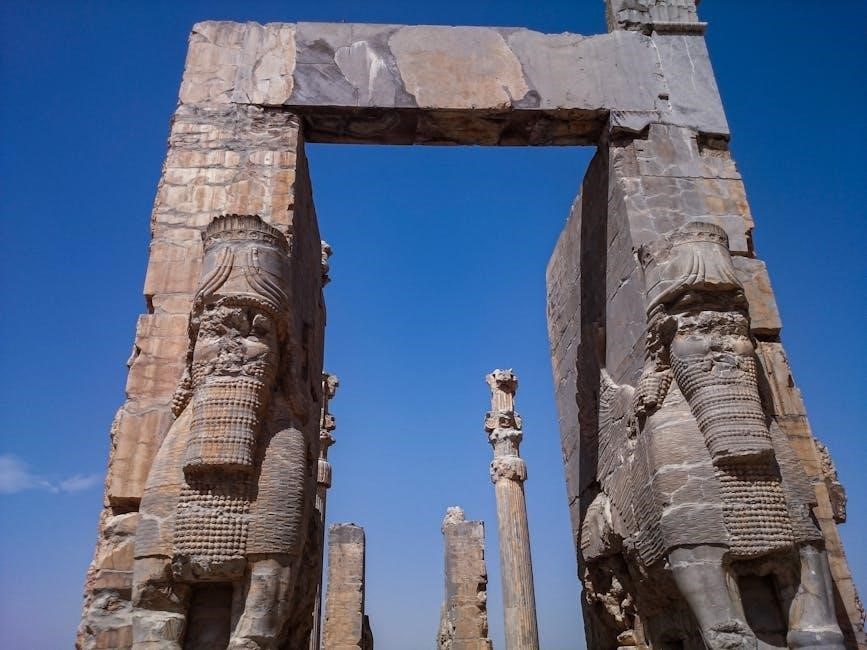
PDF image catalogs showcase the diverse subjects depicted – exotic animals, representatives from various ethnic groups within the empire, and scenes of royal processions. These depictions, detailed in PDF scholarly articles, demonstrate a deliberate effort to visually represent the vastness and multicultural nature of the Achaemenid realm. The quality of craftsmanship, as evidenced in high-resolution PDF scans, is exceptional.

PDF interpretations suggest these stone carvings functioned as symbols of imperial wealth and authority, intended to impress upon visitors the grandeur of the Persian Empire. PDF studies also highlight the reliefs’ role in legitimizing Achaemenid rule by showcasing the empire’s control over diverse populations and resources. The preservation of these details within PDF archives is crucial for ongoing research.
XV. Depiction of Exotic Animals
PDF documentation from Persepolis reveals a recurring motif: the detailed depiction of exotic animals. These aren’t simply naturalistic representations; PDF analyses suggest they held symbolic weight, representing the empire’s reach and control over distant lands and their resources; High-resolution PDF images showcase lions, bulls, and other creatures, often shown in scenes of conflict or submission.
PDF reports detail how these animal depictions were strategically placed within the palace complex, particularly on staircases and doorways, serving as visual reminders of the king’s power over the natural world. PDF scholarly articles propose these images communicated a message of strength and dominance to both Persian subjects and foreign dignitaries.
The meticulous carving of these animals, as evidenced in PDF close-ups, demonstrates the exceptional skill of Achaemenid artisans. PDF comparative studies link these depictions to broader Mesopotamian artistic traditions, while also highlighting unique Persian stylistic elements. Preserved within PDF formats, these images offer invaluable insights into Achaemenid ideology and artistic practices.
XVI. Representation of Diverse Ethnic Groups
Persepolis’ reliefs, extensively documented in PDF formats, prominently feature representatives from diverse ethnic groups within the Achaemenid Empire. These depictions aren’t uniform; PDF analyses reveal distinct portrayals of dress, tribute offerings, and physical characteristics, signifying the empire’s multicultural nature. PDF resources highlight how these images served a political purpose – demonstrating the king’s authority over a vast and varied population.
PDF scholarly articles suggest these representations weren’t necessarily accurate ethnographic portraits, but rather idealized depictions intended to convey the wealth and submission of subject peoples. PDF close-ups showcase details of clothing, hairstyles, and weaponry, offering clues about the origins and status of these groups. The consistent inclusion of these figures in PDF-accessible imagery underscores the importance of acknowledging the empire’s diversity.
PDF comparative studies link these depictions to similar representations in other ancient Near Eastern empires. The preservation of these reliefs in PDF form allows for detailed study and interpretation, providing valuable insights into Achaemenid imperial ideology and cross-cultural interactions.
XVII. Stone Carvings as Symbols of Imperial Wealth
Persepolis’ elaborate stone carvings, meticulously preserved in PDF documentation, served as potent symbols of Achaemenid imperial wealth and power. PDF analyses reveal the sheer scale of the carvings – covering vast surfaces of the palace complex – immediately communicated the empire’s resources. The depictions of exotic animals, processions of tribute bearers, and royal figures, all readily available in PDF format, visually reinforced the king’s dominion over both natural and human resources.
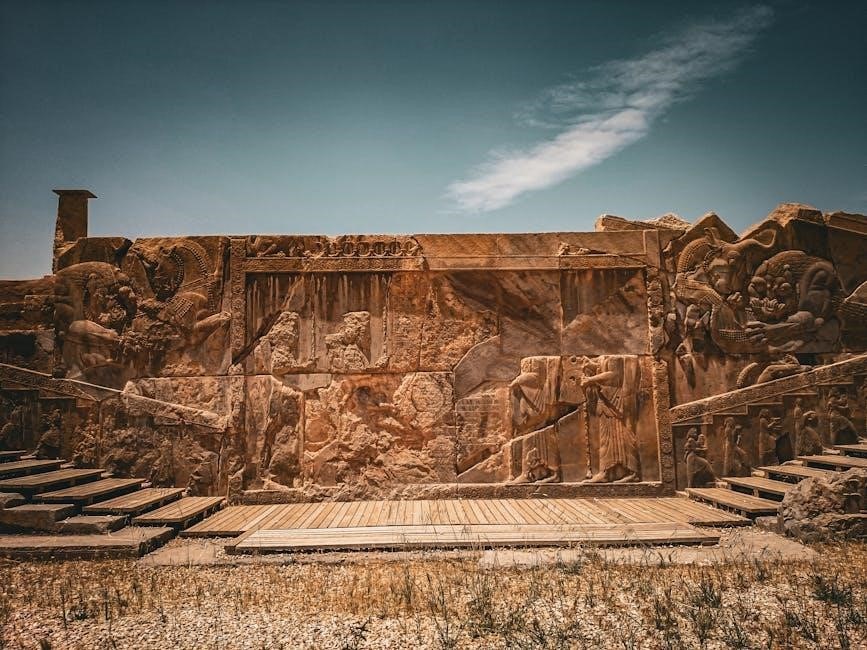
PDF resources demonstrate the high level of craftsmanship involved, utilizing expensive materials and employing skilled artisans. The intricate details and refined artistry, showcased in high-resolution PDF images, were intended to impress upon visitors the sophistication and prosperity of the Persian court. PDF scholarly articles suggest these carvings weren’t merely decorative, but actively constructed a narrative of imperial grandeur.
The very act of commissioning and executing these monumental carvings, as detailed in PDF reports, represented a significant investment of wealth and manpower, further solidifying their status as symbols of imperial power. Accessing these details through PDF archives provides invaluable insight into Achaemenid economic and artistic practices.
XVIII. Function and Purpose of Persepolis
PDF analyses of Persepolis consistently highlight its primary function as the ceremonial capital of the Achaemenid Empire. Detailed PDF documentation reveals it wasn’t a year-round administrative center, but rather a magnificent venue for hosting dignitaries and celebrating imperial power. The palace complex, extensively illustrated in PDF format, was designed to impress foreign envoys and demonstrate the empire’s vast riches.
PDF reports emphasize the role of Persepolis in receiving tribute from across the empire. The carvings depicting processions of diverse ethnic groups, readily visible in PDF images, visually represented the empire’s extensive reach and the wealth it extracted from its subjects. Accessing these PDF resources clarifies that the site served as a powerful statement of Achaemenid authority.
Furthermore, PDF scholarly articles suggest Persepolis was used for important ceremonial events, such as Nowruz (the Persian New Year). The grand scale of the Apadana and other palaces, detailed in PDF architectural plans, facilitated large gatherings and reinforced the emperor’s status. PDF archives confirm its purpose was largely symbolic and representational.
XIX. Seat of Government & Imperial Administration
PDF analyses of Persepolis reveal a nuanced understanding of its administrative role. While not a continuous, year-round seat of government in the modern sense, PDF documentation indicates it functioned as a crucial center for imperial administration during specific periods, particularly for ceremonial and reception duties. Detailed PDF reports showcase the Council Hall (Throne Hall) as a key location for administrative functions, though not the sole hub.
PDF resources demonstrate that the empire’s vast administrative network extended far beyond Persepolis. The city served more as a symbolic and ceremonial center, where the emperor received reports and made key decisions, as illustrated in PDF reconstructions of court life. PDF archives suggest regional satraps handled day-to-day governance.
However, PDF studies confirm Persepolis played a vital role in managing the empire’s wealth and resources. The Imperial Treasury, extensively documented in PDF plans, highlights its function in receiving and distributing tribute. Accessing these PDF materials clarifies that Persepolis was a focal point for imperial finances, even if not the entirety of administrative control.
XX. Reception of Dignitaries & Foreign Envoys
PDF analyses of Persepolis consistently emphasize its role as a grand stage for receiving dignitaries and foreign envoys. The Apadana Palace, meticulously detailed in architectural PDFs, was specifically designed for these ceremonial occasions. PDF reconstructions illustrate the palace’s vast hall, capable of accommodating numerous guests and showcasing the empire’s power.
PDF documentation reveals the careful choreography of these receptions, with processions of tribute-bearers depicted in the palace reliefs – images readily available in high-resolution PDF formats. These PDF-sourced depictions demonstrate the diverse ethnic groups represented, highlighting the empire’s expansive reach and diplomatic efforts.
PDF reports suggest the receptions weren’t merely symbolic; they were crucial for solidifying alliances and demonstrating Achaemenid authority. The lavish displays of wealth, documented in PDF inventories of the Imperial Treasury, served to impress foreign visitors. Accessing these PDF resources clarifies that Persepolis functioned as a powerful instrument of soft power, fostering relationships through spectacle and generosity.
XXI. Celebration of the Achaemenid Empire’s Riches
Persepolis, as detailed in numerous PDF reports, served as a monumental declaration of the Achaemenid Empire’s immense wealth and power. PDF analyses of the site’s architecture reveal a deliberate emphasis on grandeur and opulence, intended to inspire awe in visitors. The sheer scale of the palace complex, documented in detailed PDF plans, speaks volumes about the empire’s economic capabilities.
PDF-sourced imagery of the reliefs showcases processions of tribute-bearers, laden with gifts from across the vast empire. These PDF-accessible depictions provide a visual inventory of the empire’s resources – gold, silver, livestock, and exotic goods. PDF documentation of the Imperial Treasury further corroborates this, outlining the vast quantities of wealth accumulated by the Achaemenids.
The very construction of Persepolis, as outlined in archaeological PDFs, was a celebration of imperial riches. The use of high-quality materials, skilled craftsmanship, and a massive workforce all demonstrate the empire’s ability to mobilize resources. PDF studies confirm that Persepolis wasn’t just a palace; it was a carefully curated symbol of Achaemenid prosperity.
XXII. Post-Achaemenid Structures & Remnants
PDF archaeological reports reveal that Persepolis experienced limited post-Achaemenid activity, primarily consisting of opportunistic reuse and minor alterations. Detailed PDF analyses indicate that following Alexander the Great’s conquest in 330 B.C., the site suffered significant damage, but wasn’t entirely abandoned. PDF documentation showcases evidence of temporary settlements and storage facilities established within the ruins.
PDF-accessible imagery demonstrates that later Islamic-era structures were occasionally built using salvaged materials from Persepolis, a practice common in the region. These remnants, meticulously cataloged in PDF inventories, are typically small-scale and represent a secondary use of the site’s resources. PDF studies highlight the limited scope of these post-Achaemenid constructions.
However, PDF research emphasizes that the majority of visible structures at Persepolis remain fundamentally Achaemenid in origin. The site’s enduring legacy lies in its representation of that empire, with later additions being relatively insignificant. PDF reports conclude that Persepolis primarily serves as a window into the Achaemenid period, with post-Achaemenid remnants offering limited insight.
XXIII. Persepolis as a Multicultural Center
PDF analyses of Persepolis’ reliefs and architectural details confirm its function as a vibrant multicultural center during the Achaemenid Empire. PDF documentation showcases depictions of diverse ethnic groups – Medes, Elamites, Babylonians, and others – bringing tribute to the Persian king. These representations, meticulously studied in PDF reports, demonstrate a deliberate imperial policy of acknowledging and incorporating diverse cultures.
PDF-accessible imagery reveals that the clothing, hairstyles, and physical features of these depicted groups are rendered with remarkable detail, suggesting a keen observational eye and a respect for cultural differences. PDF studies highlight that this wasn’t merely symbolic; the empire actively recruited individuals from across its vast territories into administrative and military roles.
PDF inventories detail the presence of architectural elements and decorative motifs borrowed from various cultures, further emphasizing Persepolis’ cosmopolitan character. The city served as a nexus for trade, diplomacy, and cultural exchange, as evidenced by PDF-analyzed artifacts. Persepolis, therefore, wasn’t simply a Persian city, but a testament to the empire’s inclusive and multicultural nature.
XXIV. Archaeological Findings & Current Research (PDF Documentation)
Extensive PDF documentation details archaeological findings at Persepolis, revealing a wealth of information about Achaemenid life. PDF reports catalog thousands of artifacts – pottery, tablets, tools, and fragments of monumental sculpture – providing insights into daily life, administration, and religious practices. Current research, accessible via PDF publications, focuses on reconstructing the original polychrome decoration of the palaces.
PDF analyses of cuneiform tablets unearthed at Persepolis shed light on the empire’s economic system, including details of tribute payments and worker rations. PDF-based 3D models are being created to virtually reconstruct the site, allowing researchers and the public to experience Persepolis as it once was. Ongoing excavations, documented in detailed PDF reports, continue to uncover new evidence.
PDF archives from the Institute for the Study of Ancient Cultures provide access to primary source materials and scholarly interpretations. Current research, disseminated through PDF-formatted conference papers, explores the relationship between Persepolis and other Achaemenid sites, furthering our understanding of this remarkable civilization.



0 Comments